
Western Blotting Theory Understanding Protein Detection
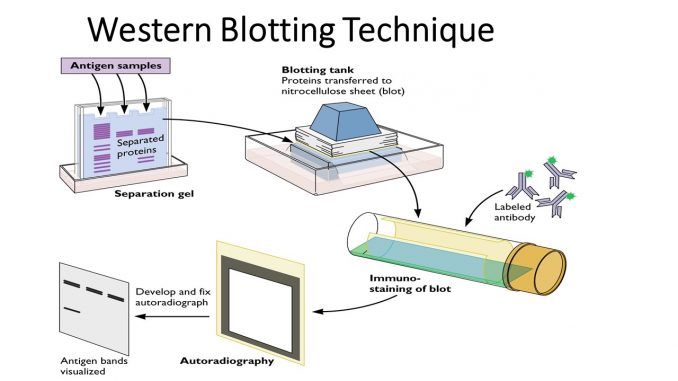
Western blotting is one of the most widely used techniques in molecular biology for detecting and analyzing specific proteins within a complex sample. Also known as immunoblotting, Western blotting combines protein separation, transfer, and antibody-based detection to provide qualitative and semi-quantitative information about proteins. Understanding the theory behind Western blotting is essential for designing experiments and interpreting results accurately.
1. Principle of Western Blotting
The fundamental principle of Western blotting relies on two main concepts: electrophoretic separation of proteins and specific antibody-antigen interactions.
-
Electrophoretic Separation: Proteins are first denatured and separated according to molecular weight using SDS-PAGE (sodium dodecyl sulfate-polyacrylamide gel electrophoresis). SDS binds to proteins, giving them a uniform negative charge and allowing them to migrate through the gel matrix solely based on size.
-
Specific Detection: After separation, comprehensive western blot wiki are transferred onto a solid membrane (such as nitrocellulose or PVDF). The membrane provides a stable surface for antibodies to bind to specific target proteins. Primary antibodies recognize the protein of interest, while secondary antibodies conjugated with enzymes or fluorophores generate detectable signals.
This combination allows researchers to detect specific proteins in a mixture, even in very low abundance.
2. Components of Western Blotting
Western blotting involves several critical components:
-
Sample Proteins: Extracted from cells or tissues, often denatured and reduced to ensure linearization.
-
Gel Matrix: Polyacrylamide gels separate proteins by molecular weight. Gel concentration is chosen based on protein size.
-
Transfer Membrane: Nitrocellulose or PVDF membranes bind proteins strongly and provide a platform for antibody detection.
-
Antibodies: Primary antibodies specifically recognize the target protein, while secondary antibodies produce a detectable signal.
-
Detection Reagents: Chemiluminescent, fluorescent, or colorimetric substrates visualize the antibody-bound proteins.
3. Western Blotting Steps and Their Theory
Understanding the theory behind each step helps explain why Western blotting works so effectively:
-
Protein Extraction: Proteins must be solubilized while preserving antigenicity. Detergents and inhibitors prevent degradation and maintain protein structure.
-
Electrophoresis: Proteins migrate in an electric field based on size. Smaller proteins move faster, separating proteins into discrete bands.
-
Protein Transfer: An electric field moves proteins from the gel onto a membrane, preserving their position. This immobilizes the proteins for antibody detection.
-
Blocking: Membranes are treated with proteins (like BSA or milk) to prevent non-specific antibody binding.
-
Antibody Incubation: Primary antibodies bind specifically to the target protein. Secondary antibodies, conjugated with detection molecules, amplify the signal.
-
Detection: Enzymatic or fluorescent reactions produce visible bands corresponding to the protein’s location.
4. Theoretical Considerations
Western blotting relies on several key theoretical concepts:
-
Specificity: The interaction between antibody and antigen ensures that only the target protein is detected. Cross-reactivity must be minimized through proper antibody selection.
-
Sensitivity: Detection methods amplify signals, allowing visualization of even low-abundance proteins. Chemiluminescence is particularly sensitive due to enzymatic amplification.
-
Quantification: Band intensity correlates with protein abundance. By comparing to loading controls or standards, researchers can assess relative protein levels.
5. Applications
Western blotting theory underlies its widespread use:
-
Protein expression analysis
-
Verification of recombinant proteins
-
Detection of post-translational modifications
-
Disease biomarker identification
Conclusion
The theory of Western blotting integrates protein chemistry, electrophoresis, and immunology. By separating proteins, transferring them onto membranes, and using antibodies for detection, researchers can analyze protein expression and modifications with high specificity and sensitivity. Mastering this theory ensures proper experimental design, accurate interpretation, and reliable results in molecular biology studies.
